General Strategy Notes
Newsletter Cadence
- 1 free article per week
- 1 paid deep-dive every 2 weeks
- Paid bonus goodies: book snippets, source notes, behind-the-scenes
Article Length
- Free preview: 300-500 words, cut at cliffhanger
- Full paid article: 1,500-2,500 words (7-12 min read)
- Subject lines: curiosity > description
Twitter Strategy
- End every thread with newsletter CTA
- Pin best viral thread
- 1 thread/week + 3-5 standalone tweets/day
The Funnel
- Twitter → Free newsletter → Paid subscriber
- Social proof: "Join 10,000 readers"
- Hook with story, convert with depth
The Valois Dukes of Burgundy — Trade, Marriage and Murder
Suggested Email Titles
- The Duke Who Bragged About Murder
- Trade, Marriage and Murder: How Burgundy Was Built
- The Real Red Wedding Happened in 1419
Suggested Headlines
- Blood on the Bridge: How One Assassination Changed Europe
- The Valois Dukes of Burgundy
Hooks / Opening Lines
Notes & Research
- Covers Philip the Bold, John the Fearless, Philip the Good, Charles the Bold
- The street assassination of Louis of Orléans (1407) — John the Fearless admitted it and called it tyrannicide
- The Bridge Betrayal at Montereau (1419) — John the Fearless assassinated at peace talks by the Dauphin's bodyguards
- Philip the Good's revenge alliance with England that prolonged the Hundred Years' War
- The marriage game — each generation strategically married to absorb territory (Flanders, Artois, etc.)
- The Burgundian estates telling the King of France "no" when he tried to absorb the duchy
Game of Thrones Parallels
Sources & Citations
- Assassination of Louis I, Duke of Orléans (1407)
- John the Fearless — Wikipedia
- Armagnac–Burgundian Civil War
- Treaty of Troyes — Anglo-Burgundian Alliance
- Duchy of Burgundy — Wikipedia
- Chastellain's Chronicle of the Dukes of Burgundy — Wikimedia Commons
Charles the Bold — The Last Knight
Suggested Email Titles
- The Last Knight Who Believed
- He Took a Vow of Chivalry. Europe Killed Him For It.
- The Duke Who Died For An Outdated Code
Suggested Headlines
- Charles the Bold and the Death of Chivalry
- The Last True Knight of Europe
Hooks / Opening Lines
Notes & Research
- One of the last real examples of knighthood in an evolving Europe
- Took sacred vows to uphold chivalry and martial excellence while Europe abandoned it
- Wanted to turn Burgundy into an independent kingdom
- Fought the Swiss, French, and Holy Roman Empire simultaneously
- Wounded in the throat at Montlhéry, kept fighting
- Killed at Battle of Nancy (1477), body found frozen, half-eaten by wolves
- His entire empire collapsed within weeks of his death
- The 3-defeat chain: Grandson → Morat → Nancy — a 3-act tragedy of hubris, desperation, and doom
Upsell Angle
- Free Who Charles was and what chivalry meant to him
- Paid The Swiss wars, the spiral, Nancy, and the wolves
Alternate History Angle
Artwork & Images


Sources & Citations
- Charles the Bold — Wikipedia
- Battle of Nancy (1477)
- Battle of Grandson (1476)
- Battle of Morat (1476)
- Burgundian Wars
- Charles the Bold — Wikimedia Commons (all artwork)
- Prayer Book of Charles the Bold (1469) — Wikipedia
The Last Knights — Charles the Bold vs Maximilian I
Suggested Email Titles
- Two Last Knights. One Died in a Ditch.
- The Knight Who Believed vs The Knight Who Performed
Suggested Headlines
- The Last Knights of Europe: Believer vs Performer
Hooks / Opening Lines
Notes & Research
- Comparison think piece: two men both called "the last knight of Europe"
- Charles was rigid — believed in the code literally, personal combat, led from the front. Died for it.
- Maximilian was romantic but pragmatic — jousted, wrote chivalric poetry, commissioned the Theuerdank epic, but used diplomacy, marriage alliances, and the printing press
- Charles BELIEVED in knighthood. Maximilian understood it was theater and turned it into propaganda
- Maximilian married Charles's daughter Mary, inheriting the Burgundian lands
Series Structure
- Free Part 1: Charles the Bold — the believer
- Free Part 2: Maximilian I — the performer
- Paid Part 3: The comparison — how the medieval world really ended
- Engagement driver: "Who do you think was the real last knight?" — poll/discussion
Upsell Angle
- Free Part 1: Charles the Bold
- Free Part 2: Maximilian I
- Paid Part 3: The comparison — what it tells us about how the medieval world ended
King Henry VI and the Rise of Richard of York
Suggested Email Titles
- The Mad King Who Lost England
- When the King Went Mad, England Burned
Suggested Headlines
- The Fall of Henry VI and the Rise of York
Hooks / Opening Lines
Notes & Research
- Henry VI plagued by insanity and mental illness
- Incapacitated in 1454, led to recall of Richard of York
- Richard was Lieutenant of Ireland since 1447, essentially exiled
- Rival Edmund Beaufort, Duke of Somerset, failed in France
- York's return to London with massive support
Notes on Improvement
- Current newsletter version has dry academic opening — needs storytelling rewrite
- Paywall should hit at a cliffhanger moment, not mid-sentence
- Add dramatic artwork at the top
The Plantagenets — 331 Years of Family Wars
Topic Overview
The Plantagenets ruled England for 331 years and produced 14 kings. Magna Carta, the Hundred Years’ War, the Wars of the Roses, and the unsolved case of the Princes in the Tower all sit inside this one family’s story. Most readers only know it through Shakespeare, which leaves a lot of ground to work with.
One long essay on the full family feud works as a flagship. Three shorter angles below can run as follow-ups or stand-alone pieces.
Suggested Email Titles
- The Family That Could Not Stop Fighting Itself
- Fourteen Kings, 331 Years, One Feud
- The Real House That Westeros Was Based On
- Blood, Crown, Repeat: The Plantagenet Problem
Suggested Headlines
- The Plantagenet Family Wars
- 331 Years of Kin Killing Kin
- How One Family Shaped — and Nearly Destroyed — Medieval England
Hooks / Opening Lines
Notes & Research
- House of Plantagenet (1154–1485) from Henry II to Richard III, including the Lancaster and York cadet branches
- Eleanor of Aquitaine’s revolt with her sons (1173–74); her 16-year imprisonment after; her outliving Henry II, Richard, and Geoffrey
- King John, Arthur of Brittany’s disappearance in 1203, and the baronial loss of trust that fed into 1215
- Magna Carta as an unenforced peace treaty, annulled by the Pope within weeks, later rehabilitated
- Edward I’s troubled relationship with Edward II; Piers Gaveston; the murder at Berkeley Castle; Edward III’s teenage coup against Mortimer and Isabella
- The Wars of the Roses as a cousins’ war — all players descend from Edward III
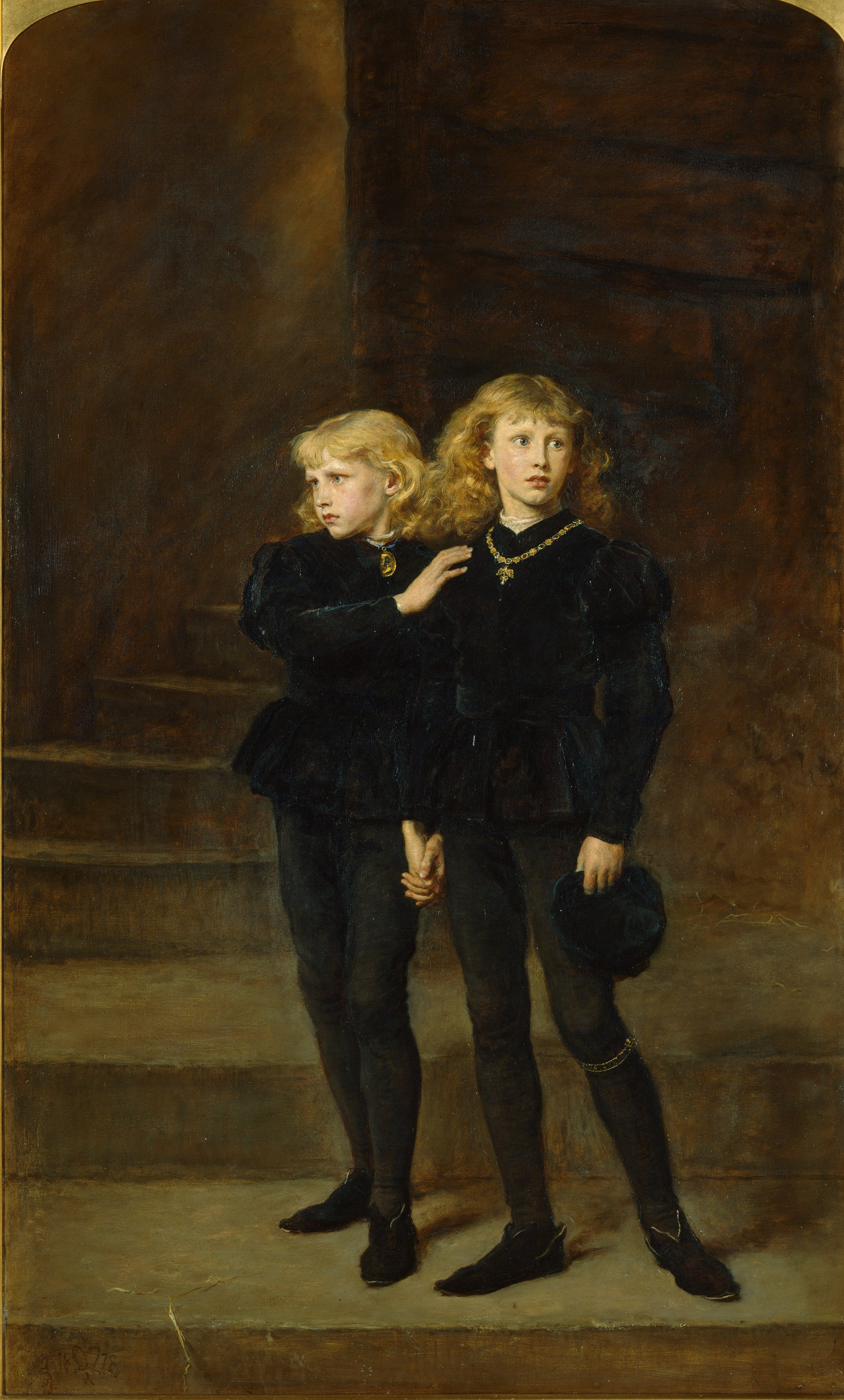
- The Princes in the Tower: Edward V (12) and Richard of Shrewsbury (9) vanish 1483; bones in urn found 1674; Richard III’s skeleton identified 2012; DNA research ongoing
- The Fontevraud effigies — Henry II, Eleanor, Richard, and John’s widow lying side by side, the only time the family was ever quiet together
Series Structure — Three-Part Saga
331 years is too much for one essay. Split across three flagship pieces — each stands alone, each gives you a paywall moment, and the whole thing builds into a saga that paying subscribers read in sequence.
Cadence suggestion: release one part per month. Each part has its own free preview and paywall. Pay subscribers get all three in full; free readers get the opens and have to convert to continue.
Alternate Angles (Future Essays)
- The Bones in the Urn: England’s Longest Cold Case
- Tower, Urn, Car Park: Three Skeletons and a Lost Kingdom
- Did Richard III Kill His Nephews? Here’s What the New Evidence Says
- Runnymede, 1215: The Peace Treaty Nobody Kept
- The Charter That Failed — Then Founded a Country
- How a 13th-Century Tax Dispute Became a Bill of Rights
- The Infant Kings of England
- Regents and Wolves: Growing Up on the Plantagenet Throne
- When the King Was Nine Months Old
Game of Thrones Parallels
Artwork & Images (Public Domain)




Sample Free Preview — Draft (v2)
- The family that couldn’t stop killing itself
- Fourteen kings, 331 years, one bad habit
- The English royal family that spent 300 years at war with itself
Deck: Fourteen Plantagenet kings. 331 years on the English throne. And a pattern of betrayal they could not shake.
On a cold night in November 1173, a woman in men’s clothing rode east across Normandy. She was the Queen of England, and she was trying to reach her sons.
Her name was Eleanor of Aquitaine. She was sixty years old, had been married to two kings, and had borne five sons to the second. Three of those sons were in Paris at that moment, preparing to make war on their father. Eleanor was on her way to join them. Henry II’s men found her on the road, took her off her horse, and brought her home under guard. For her part in the rebellion, Henry kept her under lock and key for the next sixteen years.
That is how the Plantagenet dynasty begins in earnest. A queen trying to overthrow her own husband. Sons against a father. A family war.
It is also how the Plantagenet dynasty keeps going. For the next three and a half centuries, the House of Plantagenet held the English throne — fourteen kings, beginning with Henry II in 1154 and ending with Richard III at Bosworth Field in 1485. Most of them did not die peacefully. Four were deposed by their own relatives. Two were murdered in their own castles. One was pulled dying from the snow outside the town of Nancy. One disappeared, along with his younger brother, inside the Tower of London, and no one has ever proven what happened to either of them.
Nearly every major event in medieval English history comes out of this one family’s inability to sit at the same table. Magna Carta was a peace treaty between King John and his own cousins among the barons. The Hundred Years’ War was an inheritance dispute between the Plantagenets and their French Valois relatives. The Wars of the Roses were cousins against cousins, both sides descended from the same king. Shakespeare wrote eight plays about it. George R. R. Martin took the Wars of the Roses and called it a song of ice and fire.
But the pattern started long before Bosworth. It started with Eleanor.
In 1170, Henry II tried to solve the question of succession in advance. He had his oldest surviving son, also named Henry, crowned while the father was still alive — a junior king, apprenticing before his time. The effect was the opposite of what he wanted. Young Henry now bore the crown without any of the power, and he resented it. His brothers Richard and Geoffrey were given lands they could not really govern. Eleanor, who had her own reasons to resent her husband, sided with the sons.
The revolt that followed in 1173 engulfed the entire Angevin empire. Rebels rose in England, Brittany, Poitou, and Normandy at the same time. It took Henry II almost two full years of hard campaigning to win back his own realm. He won. He forgave his sons. He did not forgive Eleanor.
Sixteen years later, in July 1189, Henry II lay dying at Chinon castle in the Loire Valley. He had one son left that he still trusted: his youngest, John, the one he called sans terre — Lackland — because by the time John was born there had been no land left to give him. From his deathbed, Henry asked to see the list of rebels who had joined his sons in the final revolt.
The first name on the list was John’s.
Henry turned his face to the wall. Within days he was dead.
It should have been the worst betrayal the family could produce. It was not even close. Fourteen years later, another prince of the house would vanish — not killed in battle, not executed in public, just gone — and the silence around his death would cost the family half its empire, and set in motion the chain of events that leads, eight generations later, to two boys disappearing inside the Tower of London.
🔒 Continue reading: the disappearance of Arthur of Brittany, Magna Carta as a family failure, and the 300-year feud that ended at Bosworth Field. For paying subscribers.
Part 1 — Post-Paywall Continuation (Draft)
What paid subscribers read after the Tower of London tease. Continues the narrative unbroken — no headings, same voice — through Richard the Lionheart, Châlus, Arthur of Brittany, the loss of Normandy, Magna Carta, and the crowning of a nine-year-old king.
🔒 — paid section begins —
To understand how the Plantagenets got from Henry II’s deathbed to the Tower of London, you have to meet the son who was not on the list of rebels.
Richard, Henry’s third son, had been on the list in 1173. He had been on it in 1183. He had been on it again in 1189. By the time Henry died at Chinon, Richard had fought against his father so many times the two men had stopped being able to meet in private without armed guards in the room. Richard was now, at thirty-two, the King of England.
He would spend almost none of his reign there.
Within a year of his coronation, Richard left at the head of the Third Crusade. He would not come back for four and a half years. The English treasury was emptied to pay for his ships; when that ran dry, it was emptied again to ransom him from the Duke of Austria, who had arrested him in disguise on the way home. Eleanor, by now in her seventies and released from imprisonment the moment her husband died, personally organised the collection of the ransom — 150,000 marks, roughly three years of royal income, a sum so large every church in England had to hand over its silver plate.
This is the man the English remember as their great crusader king. He spoke French, was raised in Poitou, and set foot in England for a total of about six months across ten years on the throne. His brother John ran the country in his absence, badly, with the predictable result that by the time Richard got back both of them had reason to mistrust each other for the rest of their lives.
Richard’s reign ended the way so many Plantagenet reigns ended: over nothing important. In the spring of 1199 he was besieging a small castle called Châlus, in the Limousin, over a dispute about some gold coins a peasant had supposedly found and not handed over. A single crossbowman in the castle walls shot Richard in the shoulder as he inspected the siege works at dusk. The wound was not dressed properly. Gangrene set in. The Lionheart, who had outfought Saladin, took eleven days to die of a minor injury received during a tax dispute.
The story goes that as he was dying he asked for the boy who had shot him to be brought forward, and forgave him. The story also goes that, as soon as Richard was dead, his captain Mercadier had the boy flayed alive. In the Plantagenet world, both things can be true.
Richard died in his mother’s arms. Eleanor was seventy-seven. She had now outlived two husbands, three of her four Plantagenet sons, and the empire her marriage to Henry II had built. She had one son left.
John.
By the summer of 1199, John was King of England, Duke of Normandy, Count of Anjou, and Lord of Aquitaine. He was also, almost immediately, the least popular king England had ever had. His nephew Arthur — the twelve-year-old son of John’s dead elder brother Geoffrey — had a legitimate claim to Anjou and Brittany that a good many barons found more attractive than John’s. In 1202, Arthur came of age and openly challenged his uncle. John won the first round. At the Battle of Mirebeau, moving faster than anyone thought him capable, he captured Arthur along with two hundred rebellious barons in a single night.
Arthur was taken to the castle at Falaise, then to Rouen. In April 1203, he disappeared.
No body was found. No trial was held. No announcement was made. The most common contemporary rumour was that John had killed the boy himself, in a drunken rage, tied a stone to the corpse and sunk it in the Seine. Another version had William de Braose, John’s enforcer, do the work on orders. A third version had Arthur die of grief in his cell. What is certain is that Arthur was alive at the end of March 1203 and gone by the end of April, and that after that month nobody in John’s service would swear to having seen him since.
The barons drew their conclusions. So did Philip II of France, who had been waiting for exactly this kind of moral leverage. Within a year, Philip’s armies had rolled through Normandy, Maine, Anjou, and Touraine — the homelands from which the Plantagenet family took its name. By 1204, the Angevin empire that Henry II had spent his life building was gone. John, who had inherited it intact, had lost it in the time it took a twelve-year-old boy to vanish from a castle on the Seine.
The English barons, meanwhile, were beginning to keep a list of their own.
It took twelve more years of misgovernment, heavier taxation, and a failed attempt to reconquer France before the list was long enough. In May 1215, the northern barons renounced their oaths of homage. They seized London. On the 15th of June, under open threat of continued civil war, John met their representatives in a meadow called Runnymede on the Thames and set his seal to a list of concessions — on the rights of bishops, on royal forests, on trial by peers, on sixty other matters, large and small — that the rebels hoped would bind the king’s hands for the rest of his reign.
Magna Carta was not yet a constitutional document. It would be rebuilt into one over the next four hundred years, mostly by lawyers who needed an ancient text to point to. In 1215 it was a peace treaty between a king and his own cousins, and it failed on its own terms. Within ten weeks, John had written to the Pope asking for the charter to be annulled. The Pope, who owed John favours, did so. Civil war resumed. French troops landed in Kent at the invitation of the barons. For a few months in the summer of 1216 it genuinely looked as if the French prince Louis, not any Plantagenet, would be the next King of England.
What preserved the line was dysentery.
In October 1216, fleeing across the tidal estuary of the Wash in East Anglia, John’s baggage train was caught by the incoming sea. The entire royal treasury, including the crown jewels, was swept away. The crown of Edward the Confessor, worn by every English king since 1066, has never been recovered. John himself, already sick from dysentery and (according to one near-contemporary) a surfeit of peaches and new cider, reached the Abbey of Swineshead alive but dying. He died there on the night of the 18th of October. He was forty-nine.
He left a nine-year-old son.
The boy was at Devizes when news came. He was crowned at Gloucester nine days later, in the small chapter house of the abbey, with a plain gold chaplet probably borrowed from his mother — because the royal regalia was at the bottom of the Wash. A French army held half his kingdom. His father had died excommunicated. The treasury was empty.
Henry III was King of England.
He would reign for fifty-six years. He would spend most of that time watching his barons tear at each other in the same patterns his grandfather’s sons had set at Chinon and Rouen and Runnymede. The empire was gone. The family was not done.
The curse was only beginning to hit its stride.
End of Part 1. Part 2 — The Long Fourteenth Century — continues with Henry III’s minority, Edward I, and the murder at Berkeley Castle.
Sources & Citations
- House of Plantagenet — Britannica
- Eleanor of Aquitaine — Britannica
- Eleanor of Aquitaine — English Heritage
- Magna Carta — Britannica
- Magna Carta — UK Parliament
- Magna Carta 1215 — The National Archives
- Wars of the Roses — Britannica
- Edward III — Britannica
- Richard III: Discovery and Identification — University of Leicester
- The Princes in the Tower — Historic Royal Palaces
- The 1674 Discovery of the Princes — Historic Royal Palaces
- The Princes in the Tower: The New Evidence — Richard III Society
- House of Plantagenet — Wikimedia Commons (all artwork)